
Just Three Things
Trying to dig ideas out of the spare room of my mind

“…it isn’t that the bulls-eye, the destination, heaven, home, doesn’t exist. It is only that it doesn’t exist in linear time. It is like a crystal hanging above our entire timeline, refracting partial images of itself onto our world that we recognize as home.”
— Charles Eisenstein, Introduction, These Wilds Beyond Our Fences
Hi Friend,
I’m writing to you this week from Penrose, Colorado, where I’m visiting my family. So far the trip has been the usual whirlwind of siblings and niblings, card games and short hikes that toddlers can do (there are a lot of babies/toddlers, including me when it comes to hiking), antique stores, dogs, and coffee. Wonderful, loud, confounding - and cold, dusty and dry, because it’s early March in the high desert.
I feel off my game; I expected to come here and have lots of thoughts exploding out of my ears, but instead I feel ambivalent, quiet, stilted. I’ve written and rewritten this post a few times now, on my phone and in my journal and now here, and have been dissatisfied with every iteration so far. There’s something under the surface in my mind that I’m trying to free; a shape I see swimming deep below the ice but can’t quite articulate.
When I talk about coming to visit Colorado, I usually say I’m going ‘home’, but I’ve felt more uncertain about calling this place home in the last couple of years. My family - most of them - live here, but my relationship with place and home is more complex. I was born in Denver, then my family moved to Southern Oregon when I was 2, where we lived off of a dirt road in the Rogue River Valley. I grew up there; we returned to Colorado when I was 15, and I lived in this house for three years1, and in the state for three more, after which I moved away - back to Oregon - for college in 2006. That was the same year that my parents adopted five siblings, the youngest of whom is 20 years younger than me. Coming ‘home’ after 2006 always felt extremely complex - or maybe a better word is foreign - I was returning to a house where my family lived, but even the shape and size of my family was no longer familiar to me. The family I grew up in had suddenly ceased to exist.
I am intrigued by friends of mine who are able to go back to their childhood homes; fascinated by what it must feel like to go back to a place that holds so many ties and memories. I used to be so jealous of them, and part of me still is, but I’ve also learned that many of them feel the same layers of discomfort or stickiness or ambivalence, even though - or maybe because - they can return to their actual childhood bedroom, that view out the window is still the same, the number of children their parents had never doubled overnight, etc., etc., etc. I used to think that maybe, if I could just ‘go home’ and actually feel like I was going home, then I wouldn’t feel such a big inner disjunction anymore; maybe being able to walk back into a house where I’d also been five would have been the thing that would help me knit together what felt, for so much of my twenties and thirties, like a deeply fractured self.
It’s possible, I guess.
It’s also possible that I would just have been broken in a different way, found difficulty feeling whole for some complete other reason. I haven’t ever been a person who found it easy to be clear about myself or the world. I don’t know that staying on our lovely little farm in Eagle Point would have crystallized things for me. I don’t know that my wish for continuity will ever go away, even though I’m learning to examine it more closely and kindly.
I think I’ve gotten as good an outline of the fish under the ice as I’m going to get. I put the quote from Eisenstein at the top of the letter because I like thinking of ‘home’ as a prism that’s always there, refracting light and feeling in certain moments. If so, this house in Colorado - with its giant, expansive sense of welcome, its detritus of children and grandchildren, its walls dented and painted and repainted by nine full-ass idiotic teenagers (now all grown), its many images of Jesus, its open doors that spill out light and the shouts of people losing at spades - well, this house, and the people in it, have given me plenty of moments of home. More than enough.
I don’t think the feeling of home shifting or changing drastically is unusual. Divorce must feel this way, same if you lose a parent or sibling. Over the years I’ve resisted some of the things that this situation was trying to teach me: that, although what I demand of ‘home’ is that it be a storybook place filled with good smells and stasis, it has more to teach me as a twisty, multitudinous, shifting place. That ‘home’ is as much defined by misunderstanding and loss as it is by happy holidays, but we often gloss over it’s darker aspects. I’m thinking of how Norman MacLean said, “It is the ones we live with and love and should know who elude us.” I’m thinking about the thoughts and parts of myself I keep back while I’m here, and how that kind of withholding is so often a part of folks’ experience of home, whether because of religion or sexual orientation or gender identity or any number of things that don’t get talked about over some dinner tables. I’m also thinking about Palestinians being bulldozed out of their homes, on ancestral land; I’m thinking of ICE agents arresting people out of their homes for speaking up on behalf of Palestine; I’m thinking of folks in LA who lost home in matters of hours, of minutes. I’m thinking of folks who never got to come home and rebuild after Katrina took everything away. I say these things out loud because I want to acknowledge that, as much as my experience with ‘home’ encompasses a specific amount of loss, it is also very enmeshed in privilege.
I think I am trying to say: this week, being in this house, I feel so so loved and I feel misunderstood. I feel welcomed and I feel confused about which of my beliefs are OK to talk about. I feel very safe, I feel very careful. I have laughed so much and felt very annoyed. I want to treasure both sides of these feelings, as they both have so much to teach me about being human. I want to think about what it might mean to sincerely call another place my home, and what kinds of joy and danger might start to unfold themselves somewhere new, if I stop living in the in-between. The degree to which I feel all these things here changes from visit to visit, from person to person. But in the meantime, the cold winds sweep off the mountains. There’s a fire in the fireplace. There are the barest hints of green on the trees, my dad makes great coffee, and my mama gets teary eyed when she hugs me in the morning.
So. This is the news I have for you, no more and no less. Thank you for joining me in my mind, even if the floor is unswept and I haven’t opened the blinds in a few days. I am deeply grateful. Here are my best three things of the week:
1. Get Millie Black
Speaking of returning home: Get Millie Black is a spy/crime thriller set in Jamaica. Millie Black is a missing persons detective who was sent by her mother to live in England as a teenager. While she’s there, her brother dies, and her inability to save him has made her a fierce advocate for endangered children, as well as a workaholic. In the show, she’s moved back to Jamaica recently to work as a detective in Kingstown, and to find out what happened to her brother. The show was created by Jamaican writer Marlon James (whose books include A Brief History of Seven Killings). The writing is good, the actors/acting are excellent. There are only five episodes, and each is over an hour long. We LOVE to see a show include trans characters who are played by actual trans actors. It’s only got one season out now on HBO; go watch it! Who knows? If enough of us do, they might make a second season.
(I heard about this show through Samantha Irby’s incredible substack, which is mostly just close analysis of Judge Mathis episodes (I don't watch JM but I do read Sam’s takes on the show, which are even better), but sometimes she also includes GREAT recs.)
Warning: this is a crime thriller, and there is a fair bit of violence, specifically anti-trans violence in the beginning of Episode 2; it is easy to skip past if that’s triggering for you.
2. Read ‘The Tail End’
“Just this once, I want to tell the story as a dog would. To tell it straight, for her,” says Sloane Crosley, in her article from 2024 about having her cat put down. Yes, an essay about a cat; yes, an essay about having a cat put down. I think you need it as much as I did. This is an article about what a pet signifies; it is also about how we make meaning, about the aftermath of loving a being with a lifespan so much shorter than our own. Of course, it makes me well up, just like the ‘cat’ and ‘dog’ slides do in Olivia deRecat’s “closeness lines” post, below:
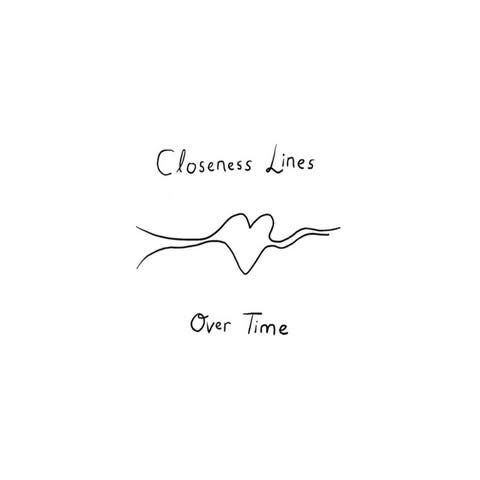
I think the thing that I love most about Crosley’s essay is how easily she gets across the sense of poignance I often feel when interacting with my own pets: I love you so much, you’re so embedded in every part of my life, do you even know it? It’s a feeling I don’t readily admit to when talking about my pets with, say, my father or brothers - people who admire and employ animals in a practical sense, but have little to no patience with the cat who lounges in a window hammock endlessly, or the dog for whom I buy anti-anxiety meds. And yet, they understand it too - if I give them time and space to - my brother’s eyes get soft when we talk about our childhood dog, my dad’s cadence changes when our old English Shepherd leans into him: yeah, bud, I see you.
But there is shame. It comes at the end and springs from the suspicion that, in being so greedy for unconditional love, we have made an awful mistake. We have recorded our lives on devices that will run out of power instead of paying proper attention ourselves. We outsourced too many of our quiet days. We also trusted that our pets knew who we were even when we weren’t so sure. And, if what they knew was “asshole,” they never let on.
This article is about how, for a time, we see and are seen by our pets, but will never be able to talk about our mutual witnessing. It is about choosing a primary relationship in which communication will never be anything less than opaque; it is about the kinds of things we describe as love, and how there will only be one side to this story.
3. Put on some background music
I’ve been working on this playlist for a while, which I call “Atmospheric Jams on Home Turf”. I am not good at naming playlists? Or I am very good?
My idea was: if I am going to have people over to my house, for dinner or cheese plates, or board games, or puzzles, I would like to have a playlist that I can put on in the background and it’s just good vibes - nothing too flashy but music that makes you feel like yeah I can eat more cheese, this dog is cool, let’s talk more about resisting the system.
I’ve been REALLY pleased with the result, which I spent my whole plane ride here listening to, and it was a great vibe for a plane nap, too. I’ll keep adding to it, but it’s 3 hours and 9 minutes long now, which is long enough for a book club, so it’s ready to share with you.
I think it works best played straight through, but if you’re a good-time shuffle gal, do your thing.
Good luck out there this week. You are loved.
Corie
As I write this, I am realizing that I have lived in my current house in New Orleans for almost two more years than I lived in this house. Wild.
I wrote something about my father's dementia and how he always wanted to go "home". And I thought what a universal feeling that is; wanting to go home when you're home. Your writing connects me with so much, myself included.
Thank you, Corie. With love from Karen. (Jesse v B’s mom)